|
Day-by-Day
Itinerary
Friday, Nov 10, 2006:
For those beginning their tour in
New York, USA, our plane leaves NY City 6:30 PM on Friday
evening, November 10, 2006. Your Tour Leader, Ruth
Shilling, meets Aaron and Sue Singleton and the group at JFK
airport in New York City and accompanies the group on the flight
to Egypt. We fly direct nonstop from New York city, USA to
Cairo, Egypt. Other departure cities in the USA are
available as add-on airfares. Contact
Ruth Shilling for pricing of add-on's.
Day
1, Sat., Nov 11, 2006: Midday
arrival in Cairo (7 hours ahead of New York time, 2 hours ahead
of Greenwich). Our first stop is for lunch at a restaurant
overlooking the Sphinx and Pyramids. Aaah! We
are here at last!
Next we
check in at our 5-star hotel (right near the pyramids).
There is some time to get settled before we have our first group
meeting. Dinner at the hotel.
Optional:
Sound & Light Show at the Giza pyramids this evening
- about $20 pp.
Hotel: Mena House or Sofitel Le Sphinx. B, L, D.
Day
2, Sun, Nov 12: We begin our
tour with 3 days of sites from Ancient Egypt's Old Kingdom
(2,575-2,150 B.C.) and earlier. Leaving Giza we drive
southward through fertile farmlands to the rarely visited
pyramids at Dashur. Egyptologists date these
pyramids as even older than the pyramids at Giza! It is
also a chance to begin by savoring the riches of Egypt without
being bothered by huge crowds of tourists and souvenir sellers.
We spend time inside the Red Pyramid (nearly as large as
Giza's Great Pyramid) and then have the opportunity for an
unforgettable walk across the open desert to the Bent Pyramid.
The desert is rich with inspiration and the vastness is
exhilarating. The Bent pyramid was a key center of worship
during the Middle Kingdom, and was much more important than Giza
at that time. It is the only pyramid to retain most of its
original casing stones. There is a very strong energy around
this pyramid.
Afterwards,
we enjoy an Ancient Egyptian style meal prepared just for our
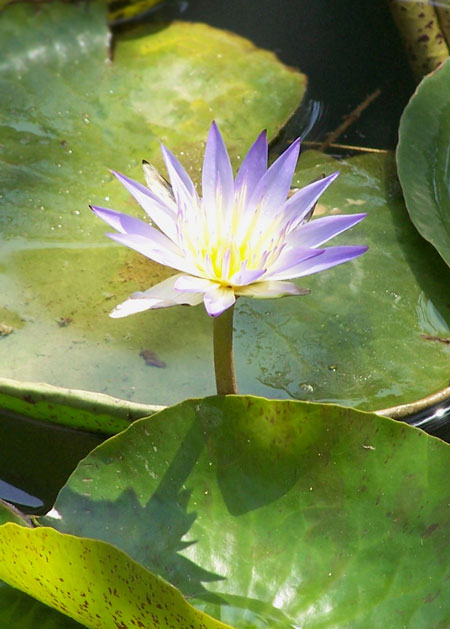
group at a nearby guesthouse, the Blue Lotus Lodge. We are
served the same foods that were eaten long ago in Ancient Egypt!
In
the afternoon we visit the Nuiserre Sun Temple at Abu
Gurab. This is a special opportunity, as this site are rarely
visited by tourists. The central alabaster alter of the
sun temple sends out "hotep" blessings
in all 4 directions.
Dinner
back in Giza. Evening visit to a Perfume Palace.
Hotel: Mena House or
Sofitel Le Sphinx. BB, L, D.
Day
3, Mon, Nov 13: Today we
spend a full day on the Giza Plateau. We begin with the Sphinx
and Valley Temple. There are legends of the Sphinx
speaking. Does the Sphinx have a message for you?
The Solar
Boat was buried (vacuum packed!) beside the Great Pyramid
and only discovered 50 years ago. This was the vehicle
that carried the king into the next world. Almost four
thousand years old, it was the oldest boat in the world when it
was discovered.
We also
visit the 2nd or 3rd Pyramid (the Great Pyramid is
tomorrow), whichever one is open at the time. Aaron &
Sue lead us in a meditation/ceremony in one of the Mortuary
Temples. Camel rides for the adventurous and a
breathtaking view of the pyramids from the panorama.
Evening:
Live Sufi Music and Dance (whirling dervishes) Show at the
Citadel in Cairo. Hypnotic and elating!
Hotel: Mena House or
Sofitel Le Sphinx. BB, L, D.
Day
4, Tues, Nov 14: We are
pleased that beginning in 2005, the Egyptian government is again
issuing special permits that have allowed us to enter the Great
Pyramid with only our small groups. These permits also
allow us to go inside the Sphinx enclosure - you can touch the
Sphinx! This privilege cannot be guaranteed, but we hope
that we will continue to have this special opportunity.
Today we will have
time to sleep in a bit before our private visit in the Great
Pyramid and inside the Sphinx enclosure. Time
inside the pyramid is often extremely transforming for people.
Late afternoon visit
to a local Papyrus Institute/Shop, before gathering our bags to
go into Cairo for the overnight train to Luxor. Our
sleeper train to Upper Egypt leaves Cairo at 10 PM and arrives
early the next morning in Luxor, once known as Thebes.
Overnight: Sleeper
Train. BB, L, D.
Day
5, Wed, Nov 15: Here in Luxor, our
New Kingdom (1550-1070 BC) experiences begin on the West Bank
with a visit to Hatshepsut’s Mortuary Temple, Deir
El Bahari, called "The Most Splendid of All" by
the ancient Egyptians. Hatshepsut was the only woman to
rule Egypt as King (other women ruled for short times as Queen),
so she is a very controversial figure. If our train is on
time we will arrive in Luxor at 5:05 AM. After eating
breakfast we can be among the first to arrive at the temple when
it opens at 6 AM. The clear energy of the morning is an
ideal time to experience the temple at its best.
Next we
see the rarely visited Ramesseum, a favorite of many of
our travelers. Here we find the only known example of an
astrological ceiling from the New Kingdom. There is also a
fallen statue of Ramesses II that was made famous by a poem of
Shelley.
Tonight
we will be staying right here on the West Bank at a guest house
near Medinet Habu temple. We have lunch and check in
before our afternoon sightseeing. The west represented the
hereafter and is where the dead were buried. In addition
to the mortuary temples we visited this morning, this is also
where the tombs are. We will see the ones in the Valley
of the Kings (where King Tut’s tomb was found).
The West Bank is also
where the alabaster is found - some call it "Egyptian
Marble." Those who would like can visit an alabaster
shop this evening.
Hotel: Amenophis
Inn, West Bank. BB, L, D.
Day
6, Thurs, Nov 16: Right
across the street from our hotel is the Medinet Habu Temple
Second only to Karnak in size, built by Ramesses III on a site
that was seeded by a temple built by Hatshepsut at the very
beginning of the New Kingdom. In the Osireion chapel the walls
have a depiction of Isis bringing the pieces of her beloved back
together into wholeness. There is also a wonderful hall of
pillars with colored reliefs of the many gods & goddesses.
After
lunch back at the guest house we retrieve our bags and drive to
the East Bank. As we leave the West Bank we see the "Colossi
of Memnon," the two large statues of Amenhotep III that
still stand, even though their temple is long ago destroyed.
When we arrive on the East Bank we check in at our 5-star hotel
(right on the River Nile). In the late afternoon we visit
the Luxor Temple, when the lighting is optimal for seeing
the wall reliefs. The dramatic lighting also helps give
the temple a special feeling in the early evening. Both
gently beautiful and full of awesome grandness, this temple was
the "Bride of Karnak" during the annual Apet festival.
Dinner at an outdoor
restaurant near Luxor Temple where there are many small shops.
Optional: Sound
& Light Show at Karnak Temple, 6:30 PM (about $20)
and/or Gold shop.
Hotel: Luxor Hilton.
BB, L, D.
Day
7, Fri, Nov 17: The splendors of
the Karnak Temple Complex fill our day today. Each
Pharaoh wanted to leave something impressive at Karnak. The
largest temple complex in Egypt, we see multiple temples,
obelisks, great gates and the famous hypostyle hall - unequalled
to this day. Also at Karnak, we visit the fascinating Open
Air Museum where we view the Red Chapel of Hatshepsut
(Karnak's original Holy of Holies), Senwosret's White Chapel
with its famous finely-carved hieroglyphs (Middle Kingdom) and
other magnificent pieces.
A
highlight for many will be a meditation with the fiery lioness, Sekhmet,
in her chapel there. The goddess Sekhmet was very popular
in Ancient Egypt. There are more statues of Sekhmet than
any other Egyptian goddess. Her consort, the god Ptah, "The
Lord of Truth," was the god of Memphis (capital of Egypt
during the Old Kingdom) and patron saint of artisans.
References to Sekhmet are found in the earliest writings and
continue all the way through Ancient Egypt, even into the time
of the Greek and Roman occupations.
Late
afternoon/evening visit to the Luxor Museum with its
special exhibit room of a cache of statues found in near-perfect
condition. They were buried under a courtyard at the Luxor
Temple and found only recently during renovations.
Hotel: Luxor Hilton.
BB, L, D.
Day
8, Saturday, Nov 18: After
checking out of our hotel we have a full days trip in our own
private A/C bus to the Temple of Seti I (with the
renowned Osireion) at Abydos and the Temple of
Hathor at Dendera. Our bus passes the
hills of Nag Hamadi, where the scrolls were found that
contain some of the Gnostic gospels.
Abydos
was the place of pilgrimage (like modern
Mecca) during Ancient Egyptian times and still holds much of the
mystery of the past. The site is associated
with the god Osiris and is said to be the place where the head
of Osiris is buried. The raised wall reliefs are some of the
finest art in all Egypt. There is also an older structure
in the back of the temple which is from a much earlier era (Old
Kingdom or earlier) called the Osireion. The book, Om
Sety, tells a fascinating story about this temple.
The
Temple of Hathor was built during the Ptolemaic (Greek)
era on a much older site that had been a place of worshiping the
Goddess Hathor in earlier times. The famous circular
zodiac was found in the ceiling of a chapel on the roof of the
temple. The ceilings and walls of the main hypostyle hall
are full of astrological imagery.
When we
return to Luxor in the evening we check into our Nile cruise
boat and have a dinner in style.
Hotel:
Presidential Nile Cruise. BB, L, D.
Day
9, Sun, Nov 19: A day to
relax, enjoy the timelessness of the Nile and watch the
landscape glide slowly by as we begin sailing up the Nile
towards Aswan. We may do a group meeting this morning while
other people on the cruise do some early sightseeing in Luxor.
Afternoon tea on deck. There is often excitement on
deck as we pass through the lock at Esna. The locals come
out in boats to hawk their wares while the cruise boats wait
their turn in the lock.
Entertainment
on board in the evening. Overnight docked in Esna.
Hotel: Presidential Nile Cruise. BB, L, D.
Day 10,
Mon, Nov 20: Morning visit to Edfu’s
Temple of Horus, the best preserved temple in Egypt. Like
Denderah, it was built during the Ptolemaic era on an older
temple site. Edfu and Denderah were paired and there was also a
festival where a sacred barque was carried from one to the
other.
In
the late afternoon we visit the Ptolemaic temple for Sobek and
Haroeris at Kom Ombo. The god Sobek is represented as a
crocodile. Haroeris is a form of the hawk or falcon deity Horus.
If you are on deck at the right time you will to see, as we
round a curve, this temple overlooking the Nile. We dock in
front and walk up to the temple.
There
are mummified crocodiles and some beautiful wall reliefs. There
are also surgical instruments represented on the walls, so it is
known as a healing temple.
Overnight
docked at Kom Ombo or in Aswan.
Hotel:
Presidential Nile Cruise. BB, L, D.
Day
11, Tues, Nov 21: Time for
some group processing on the cruise boat in the morning. Lunch
on the cruise boat and check out. This afternoon we have
the wonderful treat of visiting the beautiful Temple of Isis
at Philae. Situated on an island, we approach by motorboat
and the photo-op’s are not to be missed! The last place to
practice the ancient Egyptian religion, the Isis Temple was
closed in the 6th century AD by the Emperor Justinian
(the same one that built St. Catherine’s Monastery at Mount
Sinai). It was later used as a Christian church. Afternoon
is the perfect time (fewer crowds) for a long, full visit at the
Temple of Isis.
Dinner
and check in at our hotel in Aswan. Hotel: Basma Hotel or
New Cataract Hotel. BB, L, D.
Day 12,
Wed, Nov 22: FREE DAY.
Optional Abu Simbel trip by air ($215), or stay in Aswan.
Those who choose to take the Abu Simbel excursion will
leave the hotel early this morning. There are two temples, one
for Ramesses II and the other for his queen, Nefertari. The
temples attracted a lot of international attention when they
were moved by UNESCO during the construction of the High Dam.
The original site was flooded by Lake Nasser (which formed when
the High Dam was built).
Those
who do not go to Abu Simbel can have a leisurely morning
lounging by the pool or the excitement of adventuring in Aswan's
ancient market place. Try your hand at bargaining
or just enjoy the sights and smells, like stepping into a
storybook of the past. Another possibility is the Nubian
Museum or a felucca ride (the traditional sailboats
of the Nubians) to the archeological site at Elephantine
Island. The island was a key center of trade
throughout all of the 3,000 years of Ancient Egypt.
Hotel: Basma Hotel or
New Cataract Hotel. BB, L, D.
Day
13, Thurs, Nov 23: Morning
flight back to Cairo where we visit the Cairo Egyptian Museum
– mummies, hundreds of statues and the King Tut
collection. Lunch at a famous restaurant in downtown
Cairo. The afternoon is spent in what is called "Old
Cairo" or "Coptic Cairo." You will see the
Church of St. Mary, called El Moallaqah (the "Hanging
Church"), which was built in the 4th C. AD on two
towers of the Roman fortress of Babylon, and also the Church
of St. Stergius.
This
evening we take in the colorful Kahn al-Khalili bazaar.
Enjoy shopping and bargaining or try smoking some shisha
(flavored tobacco) at an outdoor cafe.
Hotel: Novotel Cairo
Airport Hotel, 5 minutes from the Cairo airport. BB, L, D.
Day
14, Fri, Nov 24: We spend the
morning at the Sakkara complex where we see the Step
Pyramid, the early versions of the Book of the Dead
and some interesting tombs (where we see scenes of daily
life during the Old Kingdom). Egyptologists date the Step
Pyramid as the oldest pyramid. This is where the Ancient
Mystery Schools are said to have been based, like an ancient
university for priests and priestesses. The architect of
this pyramid complex, Imhotep, was a Merlin-type person to King
Zoser (not Djoser) - advisor, healer, architect, wise man,
"second to the king." He was later deified by
the Greeks and given the name, Aschlepius.
Afterwards
we return to the Blue Lotus Lodge for lunch. This is where
we came on our first day, and it is the perfect setting for an
afternoon closing ceremony.
Dinner
back at our hotel and time to organize and pack our bags for the
trip home.
Hotel:
Novotel Cairo Airport Hotel, 5 minutes from the Cairo airport.
BB, L, D.
Day 15,
Sat, Nov 25: Thankfully, our
hotel is a stress-free 5 minute ride to the airport. Flight to
the USA leaves in the morning and arrives in New York that
afternoon (same day, 7 hour time difference).
Or you
may decide to extend your stay in Egypt. If you stay one
more day you can take a day trip to Alexandria, or go back into
downtown Cairo for more shopping. It is also possible to
arrange an extension for diving and/or beach time at a Red Sea
resort, a camel trek in the Sinai or a 3-day trip to Petra.
There
may be changes to this itinerary due to circumstances beyond our
control.
|