 |
 |
 |
 |
 |
 |
 |
|
|
|
SLIDE
SHOW
- photos of the sites on this tour by Judy Lovell, traveler in
January 2007
|
|
"Amarna,
Meidum, Abydos & more" Includes:
5-star hotels in Cairo & Luxor, best hotel in Minya, 2 meals per day,
flight from Luxor to Cairo, bottled water at all times, |
|
Day
1 |
Arrivals in
Cairo. |
|
Day
2 Sunday Feb 6, 2011 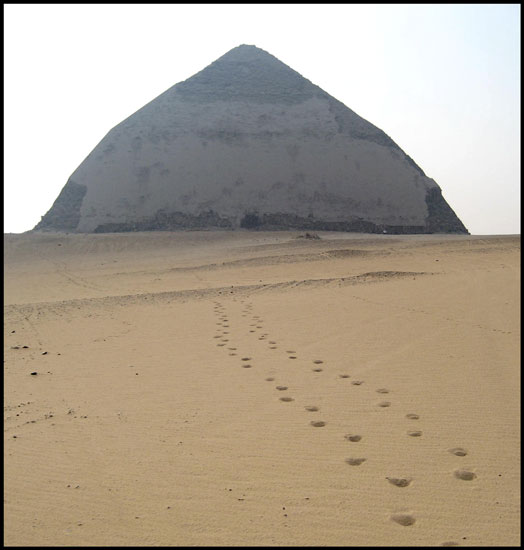 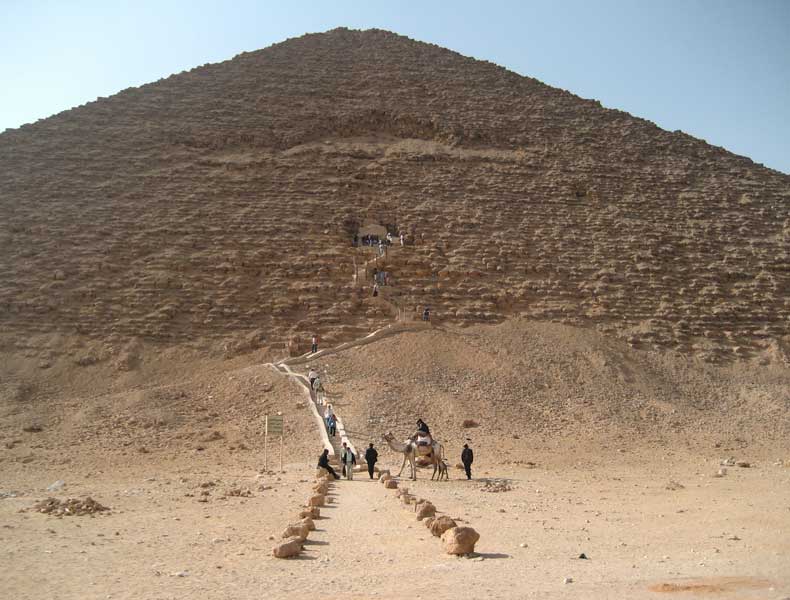 Dashur Pyramids - Red, Bent & Black ----- 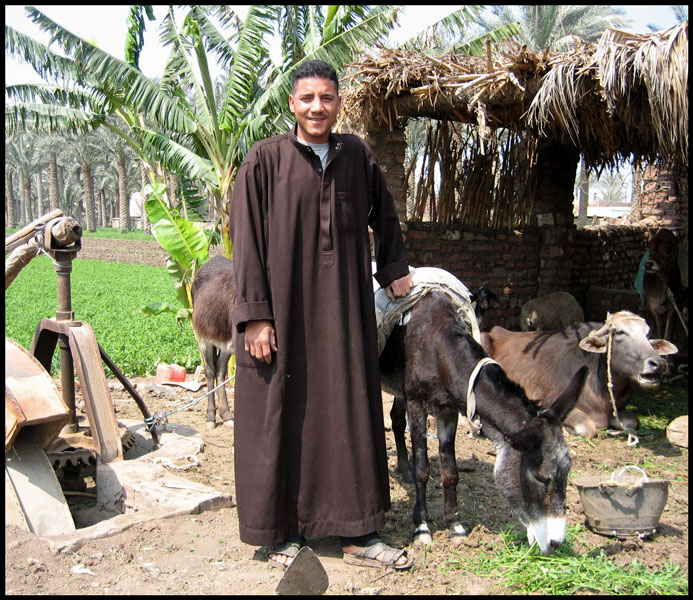 Local Farmers ----- 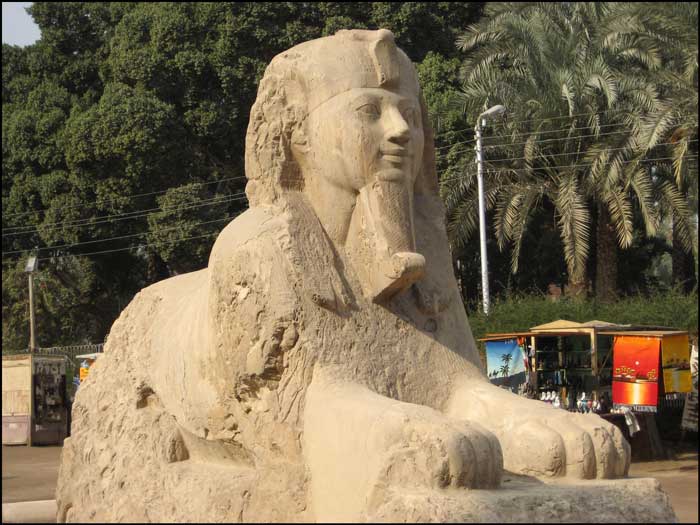 Memphis |
We
begin our tour with sites from Ancient Egypt's Old Kingdom (2,575-2,150
B.C.). Leaving Giza we drive southward through fertile farmlands
to the pyramids at Dashur, dated even older than the pyramids at
Giza! It is also a chance to begin savoring the riches of Egypt
without huge crowds and souvenir sellers. We spend
time inside the Red Pyramid (nearly as large as Giza's Great
Pyramid) and then have the opportunity for an unforgettable walk across
the open desert to the Bent Pyramid. The desert is rich
with inspiration and the vastness is exhilarating. The Bent
pyramid was a key center of worship during the Middle Kingdom, and was
much more important than Giza at that time. The Bent pyramid is
the only pyramid to retain most of its original casing stones. The
Black Pyramid (Middle Kingdom mud brick) can also be seen from
here. Shopping
opportunities: |
|
Day
3 |
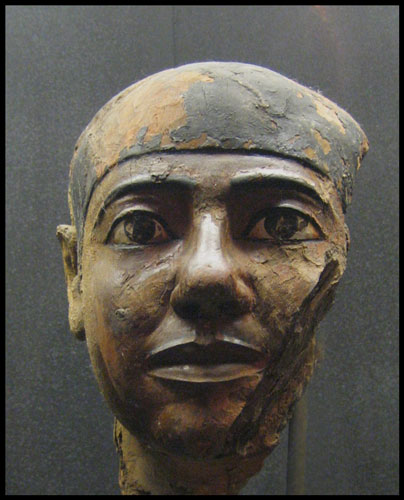
We again drive southward, this time to the Saqqara complex where we see the Step Pyramid, the early versions of the Book of the Dead (Teti Pyramid) and some tombs with scenes of the daily life in the Old Kingdom. There have also been some recent discoveries at Saqqara which our friend Ashraf Mohie el-Din (part of the excavation team) will be telling us about. Having the whole day will give us time to look at all that is going on here. Also here at Saqqara we have the pleasure of seeing the newly opened Imhotep Museum. A beautifully laid out modern museum, there are a number of wooden statues from the Old Kingdom that are particularly memorable. All the items on exhibit were found here at Saqqara and have not been on public display before. Lunch at a restaurant in the countryside with outdoor shaded seating. Shopping
opportunity: Papyrus Institute and shop |
|
Day
4 Tuesday 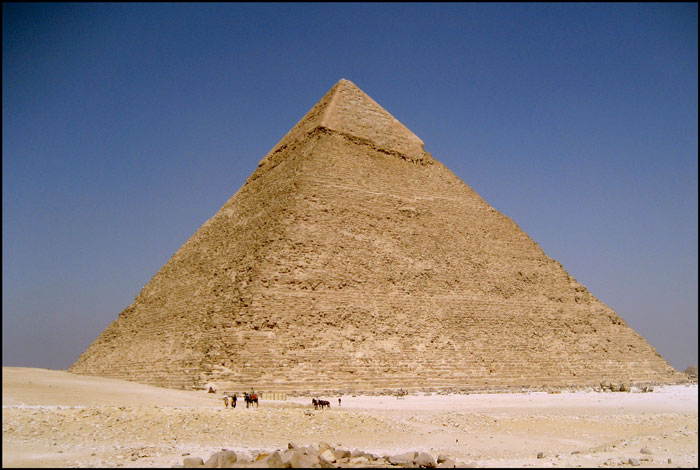 Giza Pyramids ----- 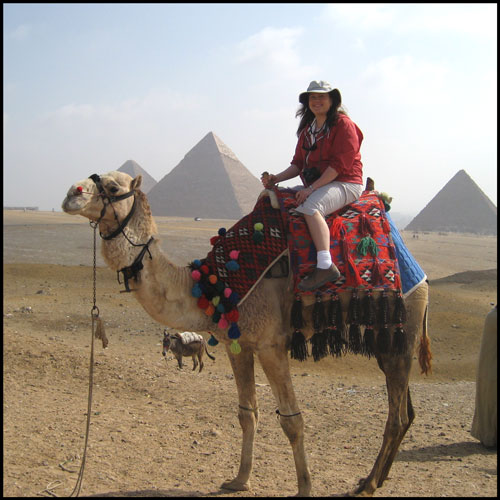 Camel rides ----- 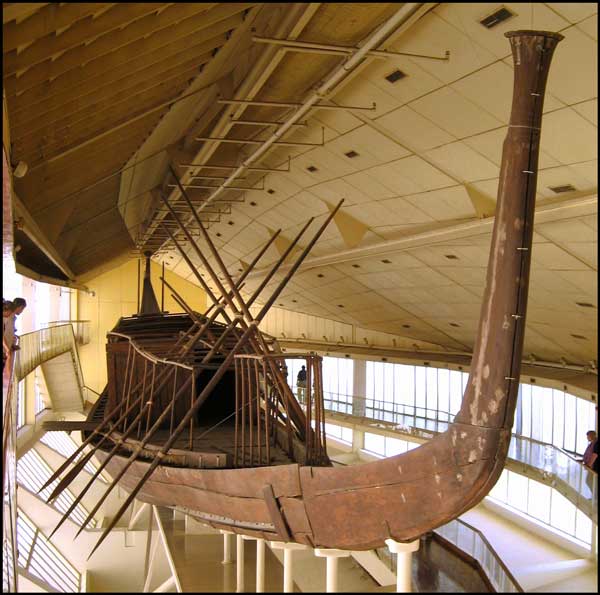 Solar Boat |
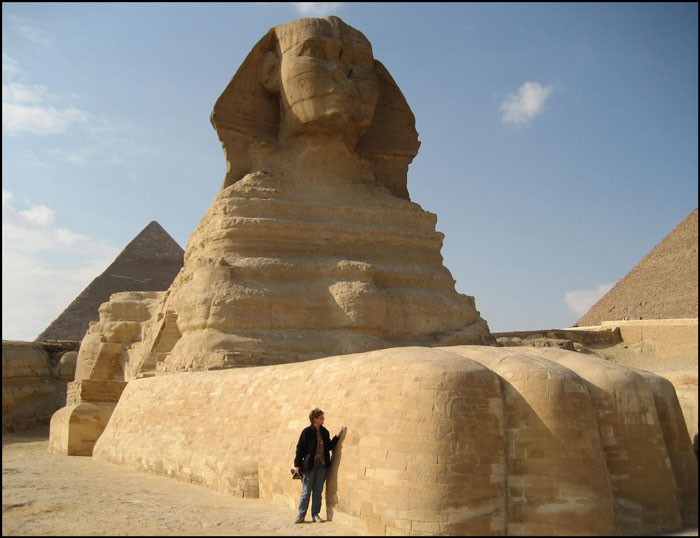
In the Solar Boat Museum we see a boat that is almost 5,000 years old and was found 50 years ago, here beside the pyramid. We will also see the Great Sphinx & Valley Temple. There are legends of the Sphinx speaking. Does the Sphinx have a message for you? The Valley Temple has huge granite blocks that fit tightly together, even today. How did they do it? Camel rides for the adventurous. Camel Videos
Overnight: 5-star hotel near the pyramids. Le Meridien Pyramids or Pyramids Park Hotel, BB, L. |
|
Day
5 Wednesday 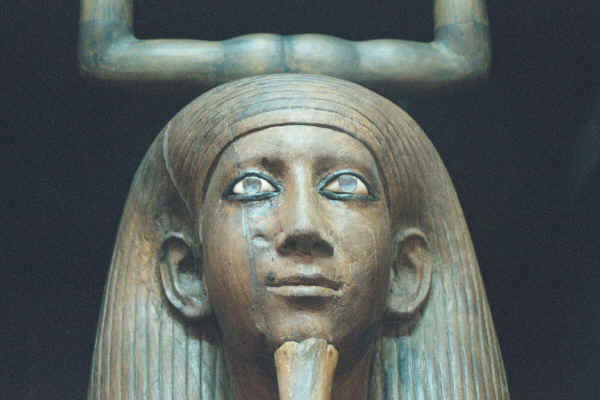 Cairo Egyptian Museum ---- 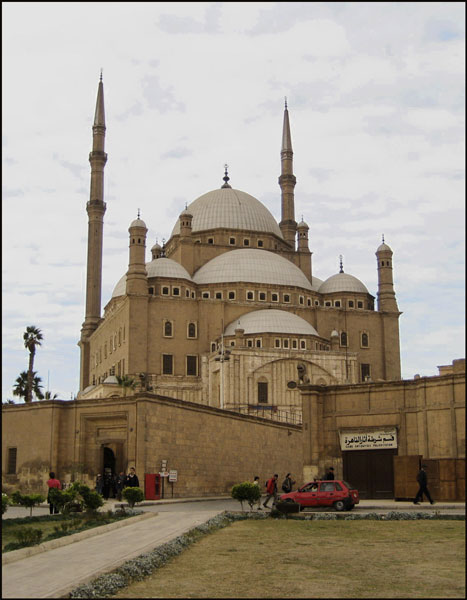
Citadel Mosque ----- 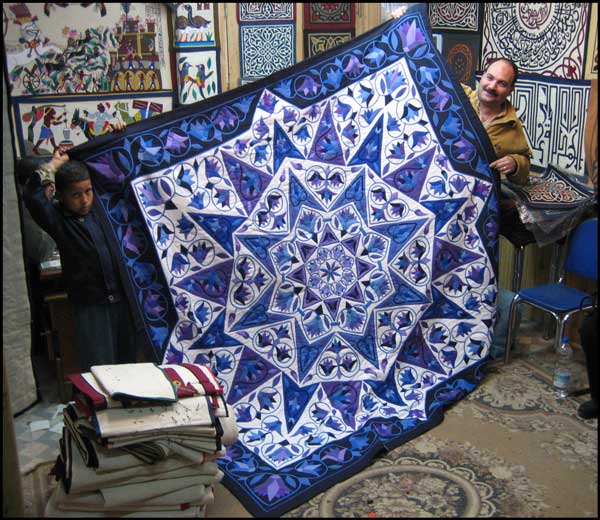 Tent Makers Ave |
Today
we begin with an exciting visit to the
Cairo Egyptian Museum.* Your guides point out the
most famous pieces and then there is free time to look at whatever
interests you the most. The treasures of King Tut, the Mummy Room,
Middle Kingdom papyruses, statues from all time periods. Those who want to be there the minute the
museum opens in the morning can leave early and meet the rest of the group when
we arrive mid-morning.*
Our last stop while we are
in downtown Cairo is for shopping
at the in the old Islamic quarter at the un-touristy "Avenue of
the Tent Makers." The narrow cobble stone
alleys, the profusion of colorful goods, the medieval architecture, and
the best scarf prices in Egypt! Meet the men who sew and design
the beautiful applique items you will see in other shops at much higher
prices than here where they make them. |
|
Day
6 Thursday 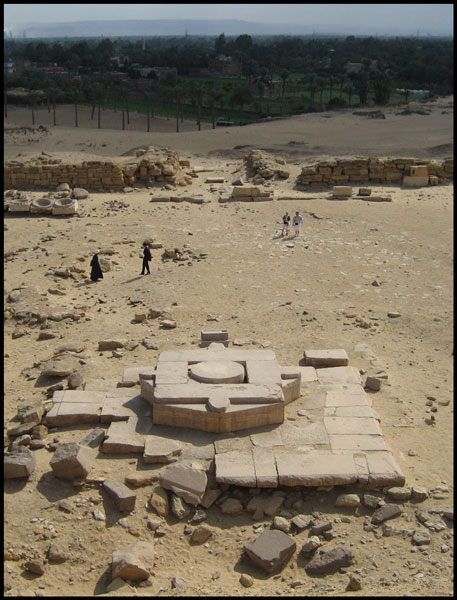 Niuserre Sun Temple --- Abu Sir Pyramids |
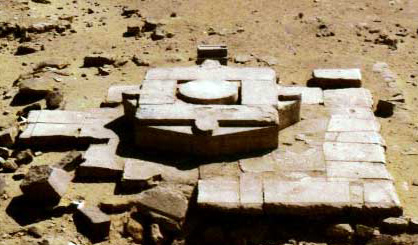
This morning we again drive south of Giza, this time to visit two sites that are not open to the general public - the Niuserre Sun Temple at Abu Gurab and the Sahure Sun Temple and pyramids at Abu Sir. Again, we will be applying for special permits that will allow us entrance to these sites. At the Niuserre Sun Temple the central alabaster altar represents the sun surrounded with "hotep" blessings in the four directions. Lunch, and a visit to a perfumery with one last good look at the Giza pyramids & Sphinx. Time to pack up for the trip through Middle Egypt tomorrow. We will do some shopping at a modern grocery store for snacks and travel food for our trip. No more stores like that in Middle or Upper Egypt. Shopping
opportunities: |
|
Day
7 Friday Pyramid at Meidum --- Ashmunein ----  Tuna el-Gebel |
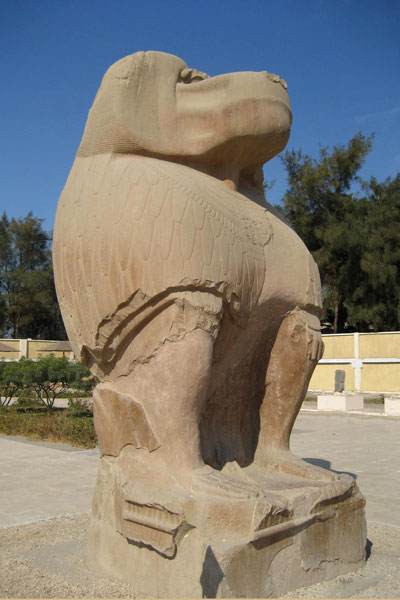
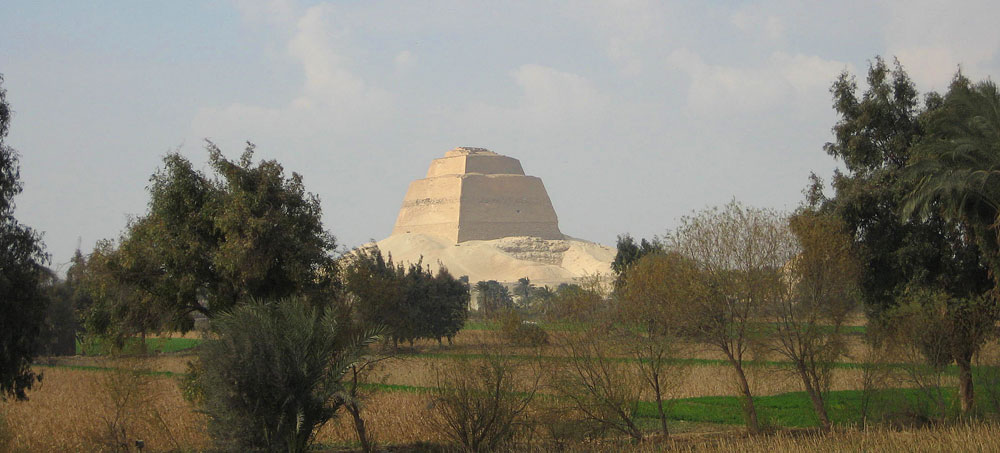
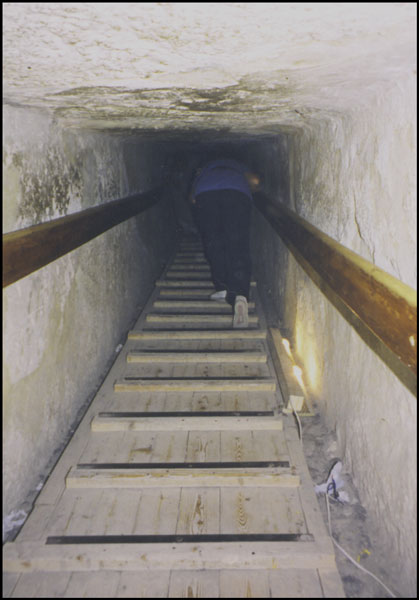
Our first visit is the Pyramid at Meidum. As we get our first look at it from a distance, this pyramid is strangely beautiful, even though it is not in good condition. Inside, we can touch some of the wooden timbers used in its construction more than 4,000 years ago! This is also the area where the famous statues (on display in the Cairo museum) of Rahotep and his wife were found, as well as the famous "Geese of Meidum". In the afternoon we visit el-Ashmunein (Arabic), Hermopolis (Greek), Khmunu (Ancient Egyptian) or the "City of the Eight". It was the main cult center of Thoth (Djhueti, Tehuti), god of wisdom and writing, patron of scribes. We also visit Tuna el-Gebel which was the neocropolis of Khmunu. Here we see the catacombs, a Late Period temple and one of the boundary stelae of Tel el-Amarna. All in all, a very exciting day. We continue on through the rural areas of Egypt to the town of Minya where we find the best hotel in Middle Egypt, located directly on the Nile. We are now far from the big city of Cairo. Overnight in the town of Minya, overlooking the Nile. BB, D. |
|
Day
8 Saturday 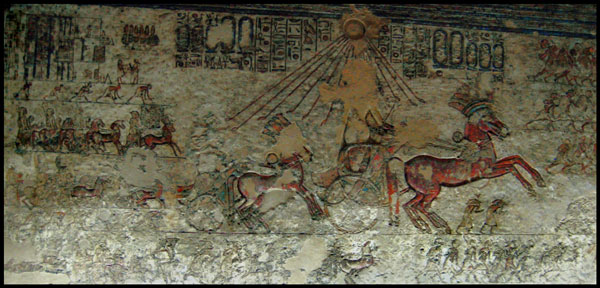 Tel el-Amarna |
This morning we visit the site of Tel el-Amarna, a city built by Akhenaten and Nefertiti during the New Kingdom. We visit some nobles tombs with wall reliefs unequalled anywhere else in Egypt. The pictures appear alive and even as though they are moving. We also visit the Northern Palace, one of the Boundary Stele (a marker of the city limits), the Southern Palace and the tomb built for Akhenaten. More photos of Tel el Amarna. Overnight in the town of Minya, overlooking the Nile. BB, D. |
|
Day
9 Sunday  Beni Hasan ----  Speos Artemidos |
Today we begin with the tombs at Beni Hasan, a Middle Kingdom (2040 - 1640 BC) site. The nobles' tombs portray scenes from the daily life, and are well preserved, full of color and quite fascinating. Acrobatics, dancing, and military sports are emphasized. But there are also scenes of making flour, baking bread, weaving cloth, and even a husband and wife on their wedding night! There are many animals portrayed - both those that were domesticated and those that were hunted. There are also a few "mystic" beasts to speculate about, a unicorn... or what do you think? It is near Beni Hasan that we find another interesting site, the "Speos Artemidos," a rock cut temple for Pakhet, an aspect of the lioness goddess Sekhmet. It is here that the female pharaoh, Hatshepsut, made her declaration denouncing the Hyksos and telling of her mission to resuscitate the temples of Egypt. Overnight in the town of Minya, overlooking the Nile. BB, D. |
|
Day
10 Monday 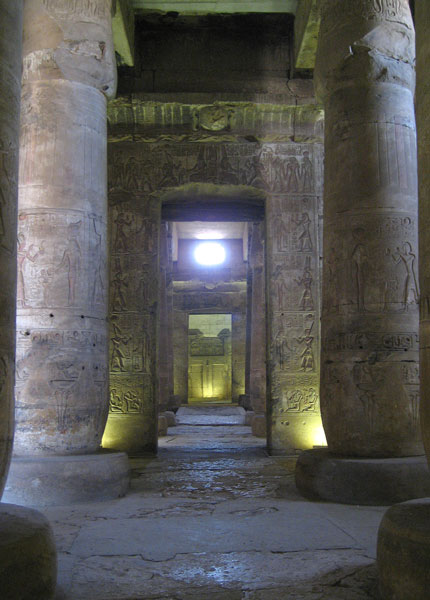 Abydos ---- Ramesses II Temple |
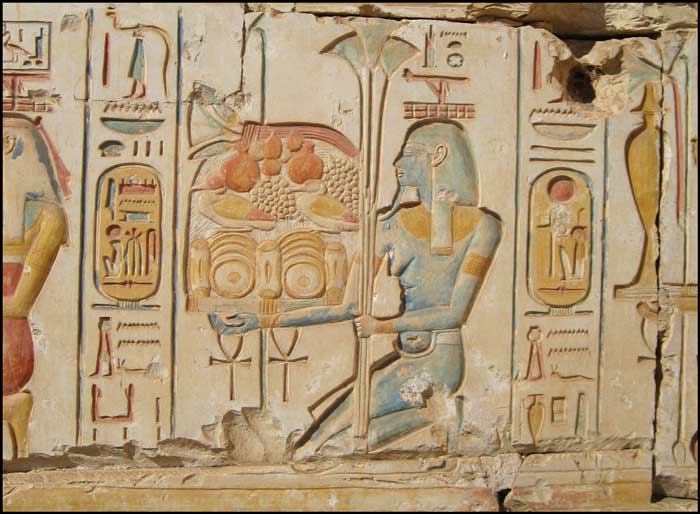
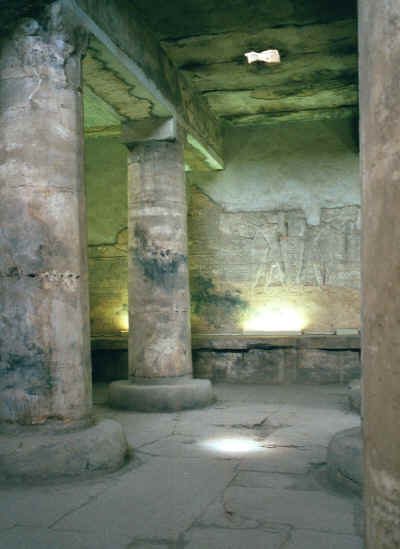
Today we leave Minya and travel still further south to visit Abydos, the place of pilgrimage in Ancient Egypt. We will arrive midday as the convoy of buses with tourists coming from Luxor is leaving. Temple of Seti I (with the renowned Osireion). The temple is all ours for the whole afternoon. Many feel that the reliefs of this temple are the highest art found in Ancient Egypt. It is truly unforgettable.
Afterwards
we continue to Luxor, passing through Nag Hammadi where the
writings were found that are now called the Nag Hammadi Library.
Discovered in 1945, these ancient codices (dating from 390 AD) contained the Gospels of Thomas, Mary and others. |
|
Day
11 Tuesday Dendera ---- 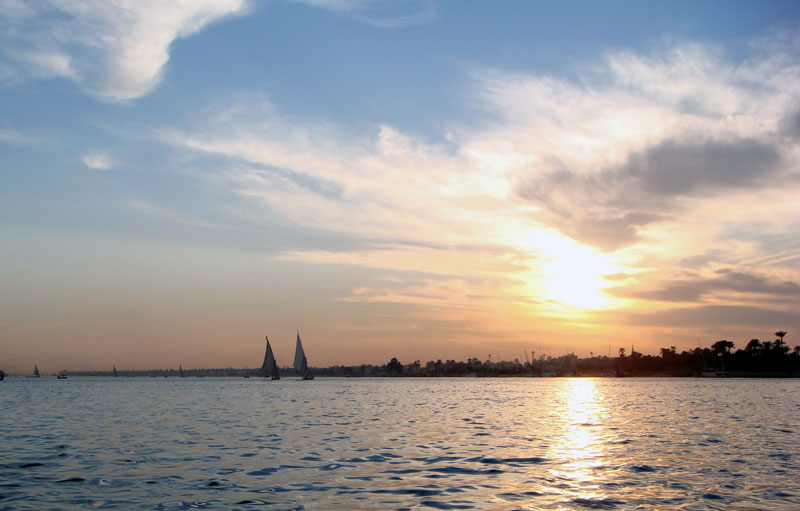 Nile Sunset |
Taking the Nile Cruise to Dendera gives us a chance to relax and watch the timeless life along the Nile pass by at a pace that brings us into the life of times past. Lunch and afternoon tea served on board. Overnight: Luxor 5-star Hotel - Sonesta St. George. BB, L. |
|
Day
12 Wednesday Valley of the Queens ------- 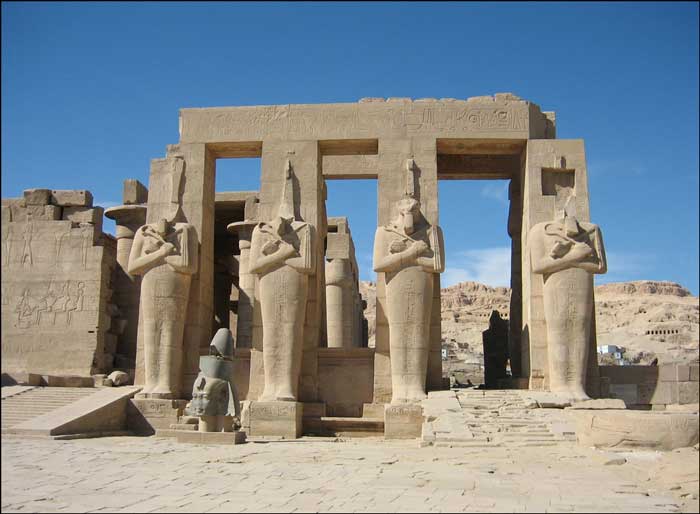 Ramesseum ---- Tombs of the Nobles ----- 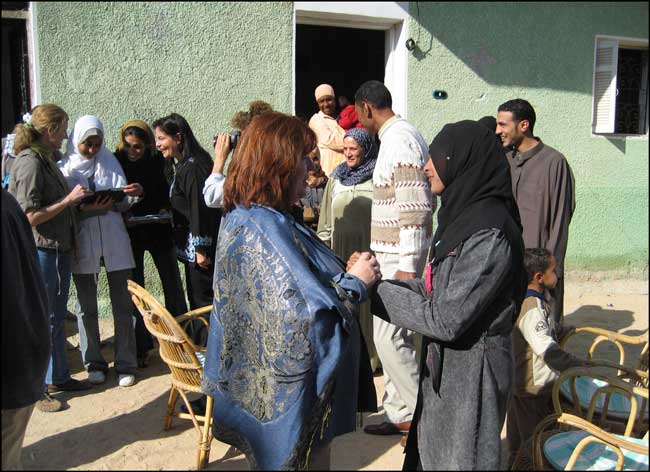 Villagers ---- 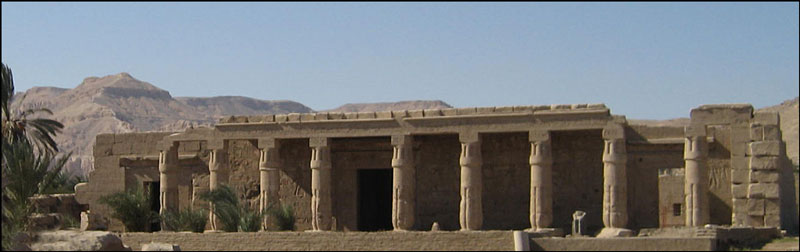 Seti I Temple --- "Colossi of Memnon" ---- Felucca Ride |
Today
we visit the West
Bank of Luxor, one of the
most famous archeological sites in the world. We
begin with the Valley of the Queens,
where we see our first New Kingdom tombs. Optionals: |
|
Day
13 Thursday 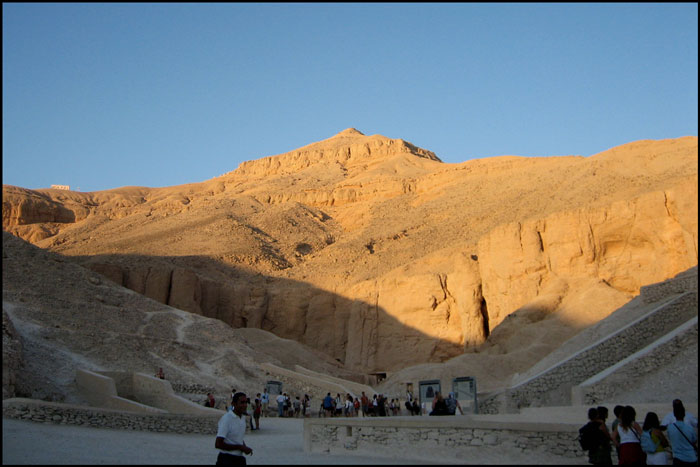 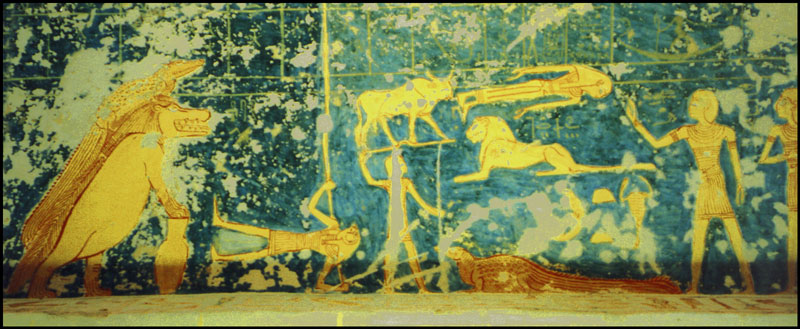 Valley of the Kings --- Hatshepsut's Temple --- 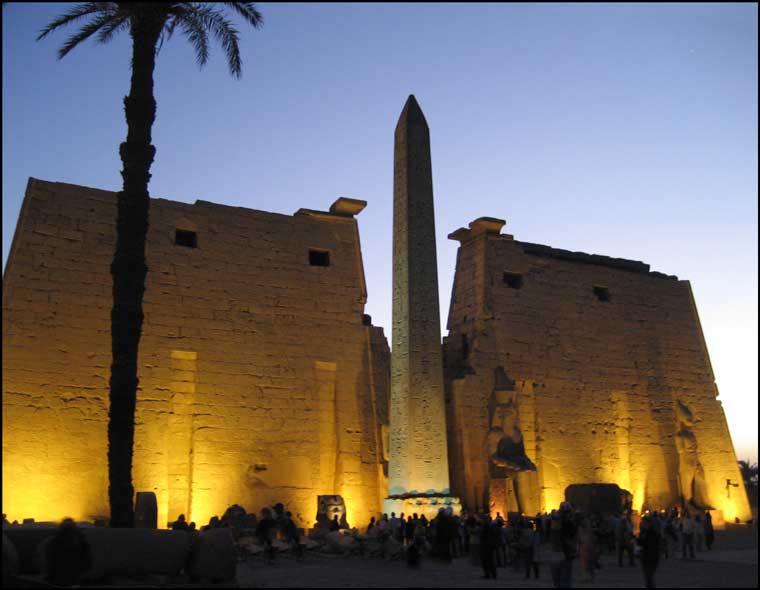
Luxor Temple |
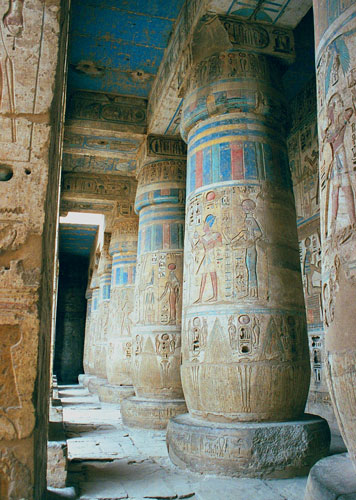
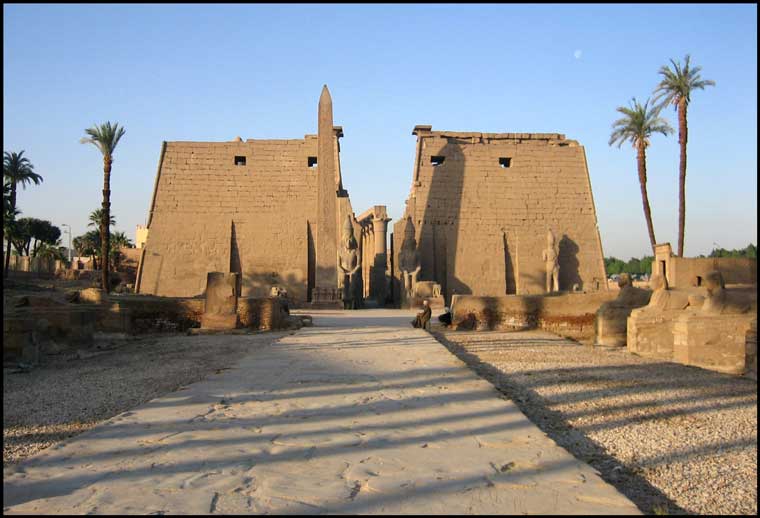
We are again on the West Bank of Luxor today, this time visiting what is probably the most famous archeological site in the world, the Valley of the Kings, where King Tut's tomb was found. There are many tombs here, and excavations are still going on, as well as renovations to tombs that have been uncovered a long time. One never knows which tombs will be open that day, but there will be a variety to choose from.
A recent highlight is the reopening of the Ramesses V & VI tomb.
It has been
restored with modern techniques pioneered during the restoration of the
tomb of Nefertari (Nefertari is no longer open to the public), and is
truly breathtaking. This tomb requires an extra ticket, but it has
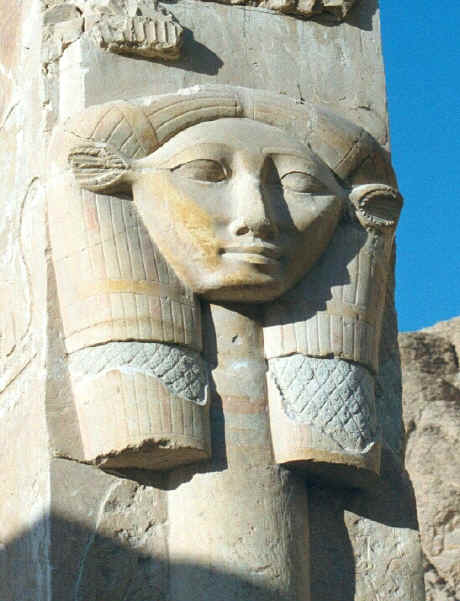
been included in your tour. We would not want you to miss this one! One of the outstanding features is the picturesque Hathor columns in the Hathor Chapel on the second Level. We are also privileged to be admitted to the third level which was only recently opened to the public. More photos of Hatshepsut's Deir El Bahari Temple. We spend the later afternoon and
early evening at the Luxor Temple (when
the lighting is optimal for seeing the wall reliefs). When the sun
sets, the temple is lit up giving the temple a special feeling. It
also gives us an opportunity for some dramatic photos. Both
gently beautiful and full of awesome grandness, this temple was the
"Bride of Karnak" during the annual Apet festival. |
|
Day
14 Friday 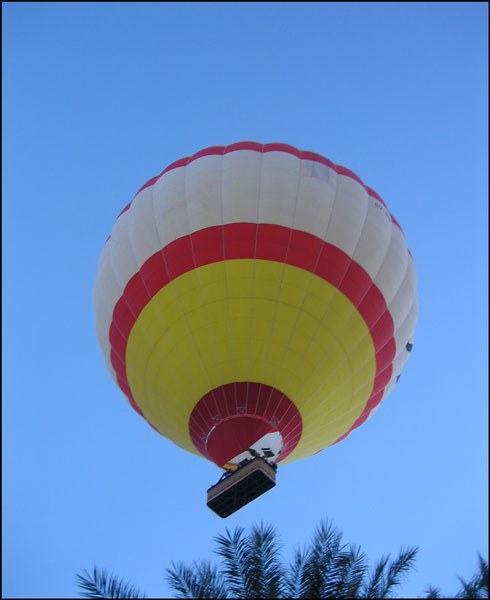 Balloon Ride --- 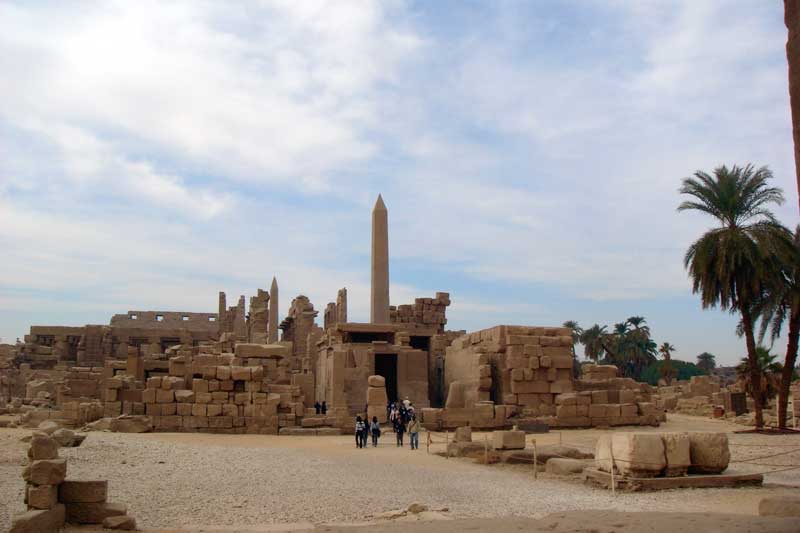 Karnak ----- 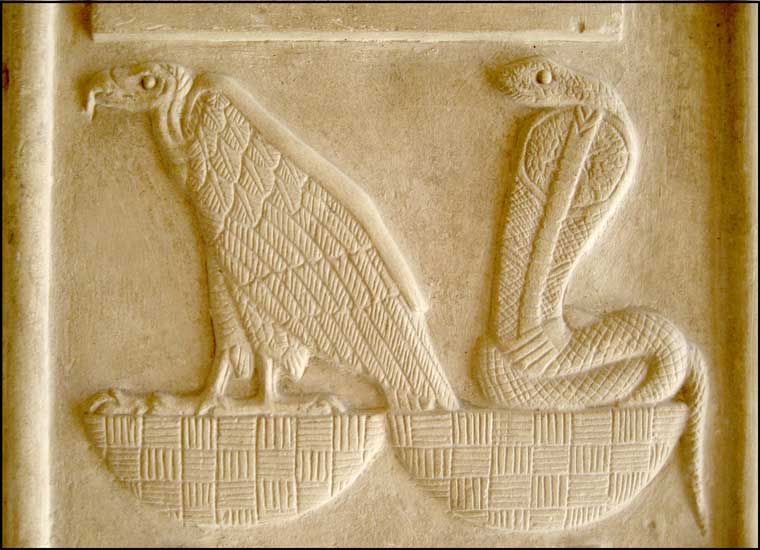 Open Air Museum ----- 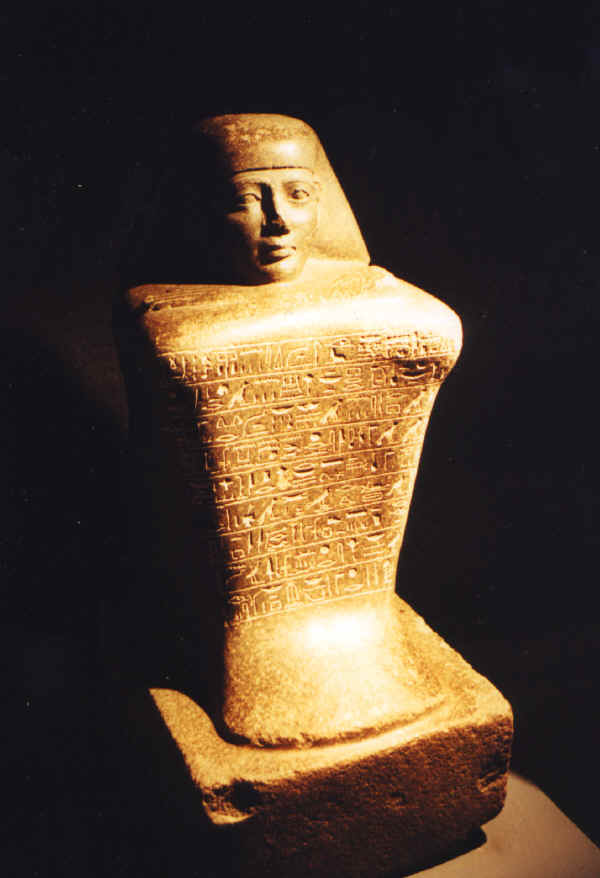 Luxor Museum |
Optional
early morning
balloon ride over the West Bank of Luxor. See the temples from a very different perspective! You decide
about this option while you are in Egypt, a few days before arriving in
Luxor. The splendors of the Karnak Temple Complex fill most of our day today. Luxor was the center of government during the New Kingdom and each Pharaoh wanted to leave something impressive at Karnak. The largest temple complex in Egypt, we see multiple temples, obelisks, great gates and the famous hypostyle hall - unequalled to this day. We also see the Sacred Lake, the Festival Hall and Botanical Garden of Tutmosis III (a precursor of Napoleon's later record of the fauna and flora found in Egypt). Also at Karnak, we visit the fascinating Open Air Museum where we view the Red Chapel of Hatshepsut and Tutmosis III (Karnak's original Holy of Holies) and Senwosret's White Chapel with its finely-carved Middle Kingdom hieroglyphs. These are in raised relief - some of the best to be found anywhere. There is something new each time we visit, as reconstruction of new pieces is ongoing.
Bring extra film (or lots of memory) for Karnak.
Optionals: |
|
Day
15 Sat, Feb 19, 2011 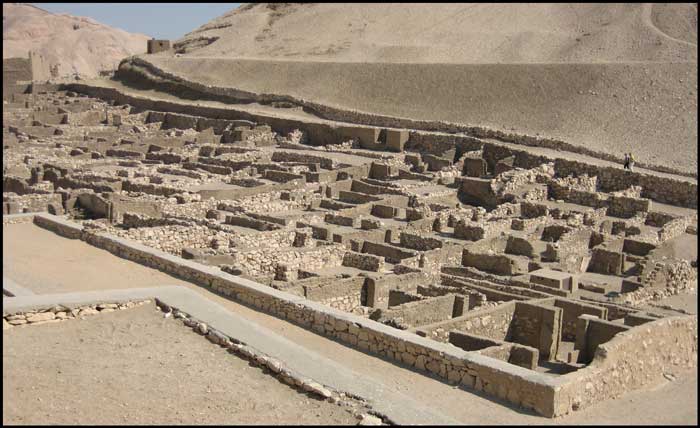 Valley of Workers ---- Medinet Habu Temple --- Flight to Cairo or begin an Extension |
The last tombs that we
visit are at Deir El Medina, the
Valley of the Workmen. This was called the "Valley of Truth" in Ancient
Egypt and is where the workers and artists who built and decorated the tombs in the
Valley of the Kings lived. Their own tombs have colorful scenes
from daily life in the New Kingdom. There is also a chapel here
with the famous Judgment scene.
Overnight: 5-star hotel near the Cairo airport. Iberotel Cairo Airport, 5* or Novotel Cairo Airport, 4*. BB, L. Register for this tour --- Additional Options for after the tour (see below). |
|
Day
16 Sunday, Feb 20, 2011
Tour is finished
|
Return flights home. For those leaving for the USA, there is an increase of 7 hours for the time difference between Cairo and New York, 10 hours for California. For the UK, the time difference is 2 hours. There may be changes to this itinerary due to circumstances beyond our control. |
|
Optional Add-on Extensions |
|
|
Cairo |
|


|
|
|
|
|
|
Photo credits this page: all photos by Ruth Shilling.
.